Selangor allocates RM10 million to maintain critical roads

SHAH ALAM: The Selangor State Government allocates RM10 million annually to carry out Pavement Conformity Assessments (PCA) in an effort to maintain roads that face critical soil structures, especially on Jalan Meru, Klang and Tanjung 12, Kuala Langat.
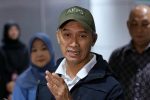
Exco for Infrastructure and Agriculture Datuk Izham Hashim said the data-based approach was important to ensure that the maintenance methods and technology used were suitable for local land conditions, especially heavy vehicle routes.
“There are several critical roads identified under the supervision of the State and Federal Public Works Departments (JKR), with priority given to routes that pose a safety risk to users.”
“We are currently dealing with issues on Jalan Meru, Jalan Iskandar and Jalan Merbau where the roads had to be closed to allow repair work to be carried out,” he said after the Letter of Acceptance (SST) Handover Ceremony for the Long-Term Contract (KJP) for State Road Maintenance for 2026-2030 at the JKR Mini Stadium here on Monday.
Izham said the movement of lorries and heavy vehicles on problematic dirt roads was one of the factors accelerating road damage, hence a long-term solution approach was needed.
He said the state government was also using Slurry Premix Surfacing (SPS) technology in several selected locations, including to address problems of slope collapse and subsidence of roads.
Apart from that, Izham said the state government was also facing new challenges involving cable theft, particularly street lighting cables, which was becoming increasingly widespread and had a major impact on safety and infrastructure maintenance costs.
He said cable theft cases showed a serious increase with losses exceeding RM30 million recorded by Tenaga Nasional Berhad (TNB) last year.
As a mitigation measure, Izham said among the approaches being considered is the use of solar-powered lighting systems to reduce the risk of theft, given that the case not only occurs on highways, but also involves open areas.
On the issue of pig farms, Izham said the emptying process would be implemented in stages, expected to begin in the third quarter of this year. He said farmers were given six months to complete the entire process, including slaughter, subject to continuous monitoring by veterinarians.
He said that livestock found to be positive for African Swine Fever (ASF) will also be disposed of on site, while those confirmed to be negative will be sent to a slaughter facility in Rawang.
“We have not issued new licenses since last year and breeders are not allowed to add new livestock during the clearance period which we expect to be completed in the third quarter of this year,” he said.
— BERNAMA